
13 games, Nov. 19/22/23, 2026
566 +2/232
Week 11: 64 Touchdowns, 3 ATDs
BAL@CAR: Who makes the better play?
Defense players have one mission: Prevent the opposing offense from scoring. That means keeping ballcarriers out of the end zone.
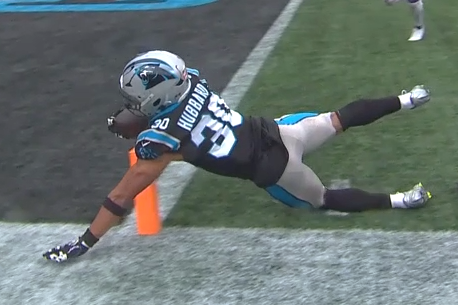
Baltimore safety Malaki Starks (24) pushes Carolina’s Chuba Hubbard out of bounds before he reaches the end zone. But because Hubard is able to wave a portion of the ball over an out-of-bounds field marker, a pylon, he is awarded a touchdown. Does this seem fair to Starks?
Hubbard lands fully out of bounds. In essence, this means the end zone has magically expanded to accommodate his inability to reach the actual scoring area, which is already 53 1/3 yards wide. The break-the-plane rule and the interpretation of pylons give ballcarriers all sorts of leeway to dodge defenders, avoid the end zone and still get six points. Fair? It sure doesn’t seem like it. Hocus Bogus Rating: 5
Video and image: Fox Sports
AZ@KC: Another extra-wide end zone
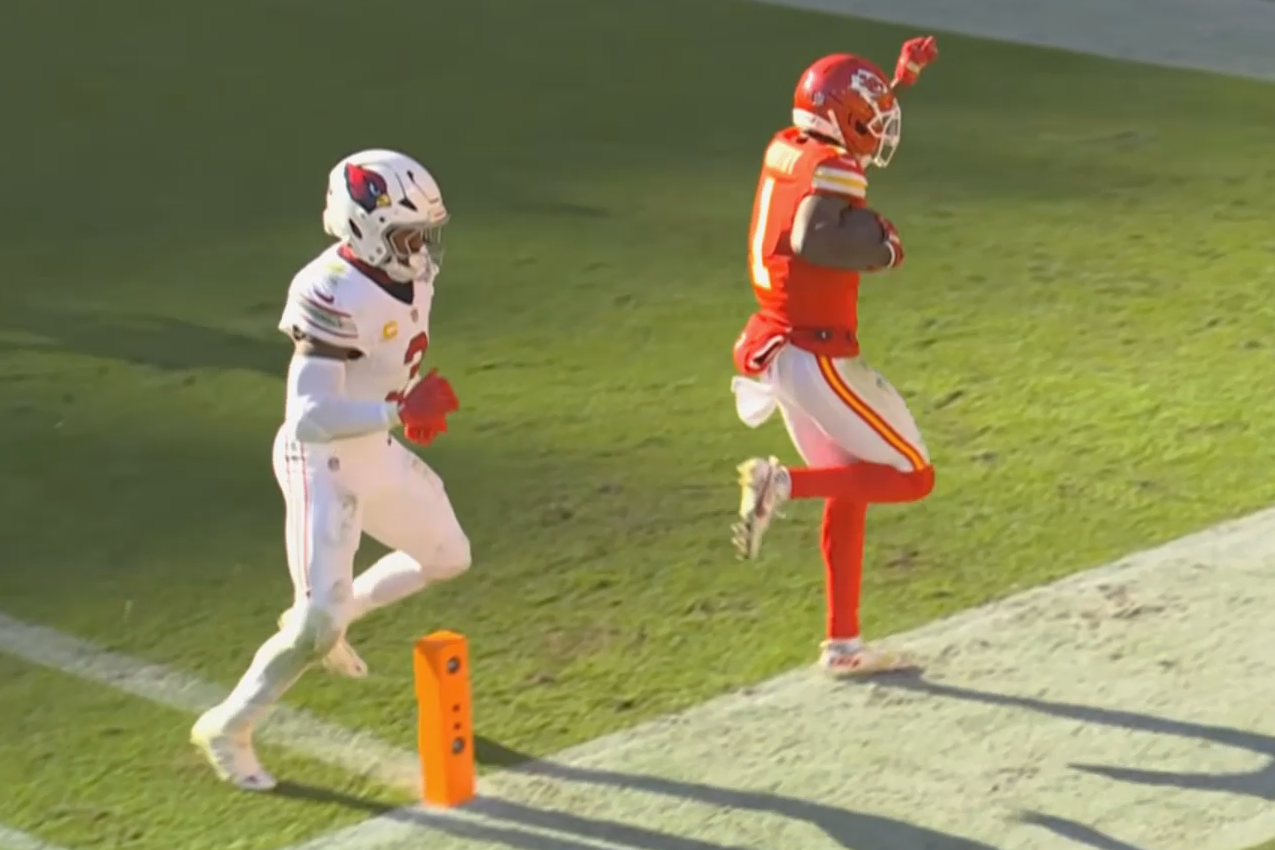
Like Chuba Hubbard in the previous example, the Chiefs’ Xavier Worthy never makes contact with the end zone. His path to paydirt was blocked by Arizona safety Budda Baker (3). So he runs wide, exploiting the break-the-plane rule and landing out of bounds on his first point of contact beyond the goal line. A handy convenience for a ballcarrier, a genuine annoyance for a defender. Rating: 4.5
Video and image: CBS Sports
TB@DET: No go, no touch
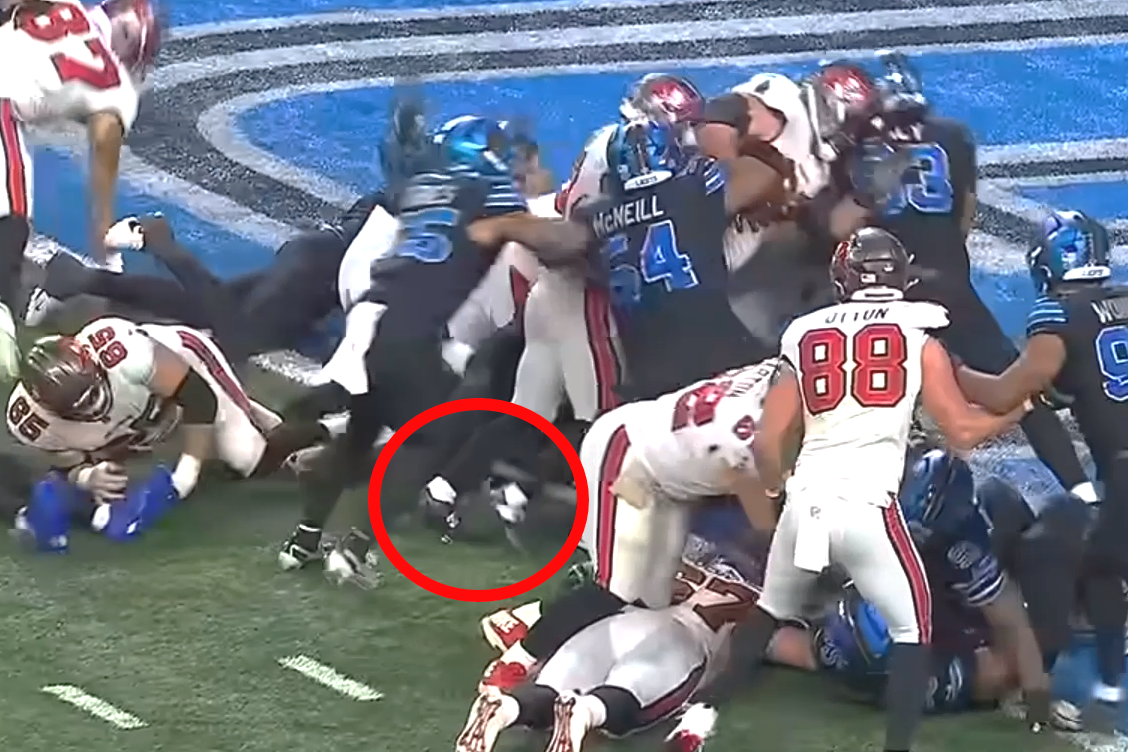
Tampa Bay’s Bucky Irving gets stoned in front of the goal line by the Detroit defensive front. No part of his body, including his feet (see image), ever reaches the end zone. Officials sensibly rule him short. But moments later they change their minds and rule a touchdown.
Does anyone actually know if Irving broke the Great Invisible Plane? And even if he did, is this effort really worthy of six points? It seems the superior effort was delivered by Detroit’s defenders, who prevented Irving from reaching the end zone. It’s yet another tough call for the defense. Rating: 4.5
Video and image: CBS Sports
TEN@DAL: The mysterious pylon
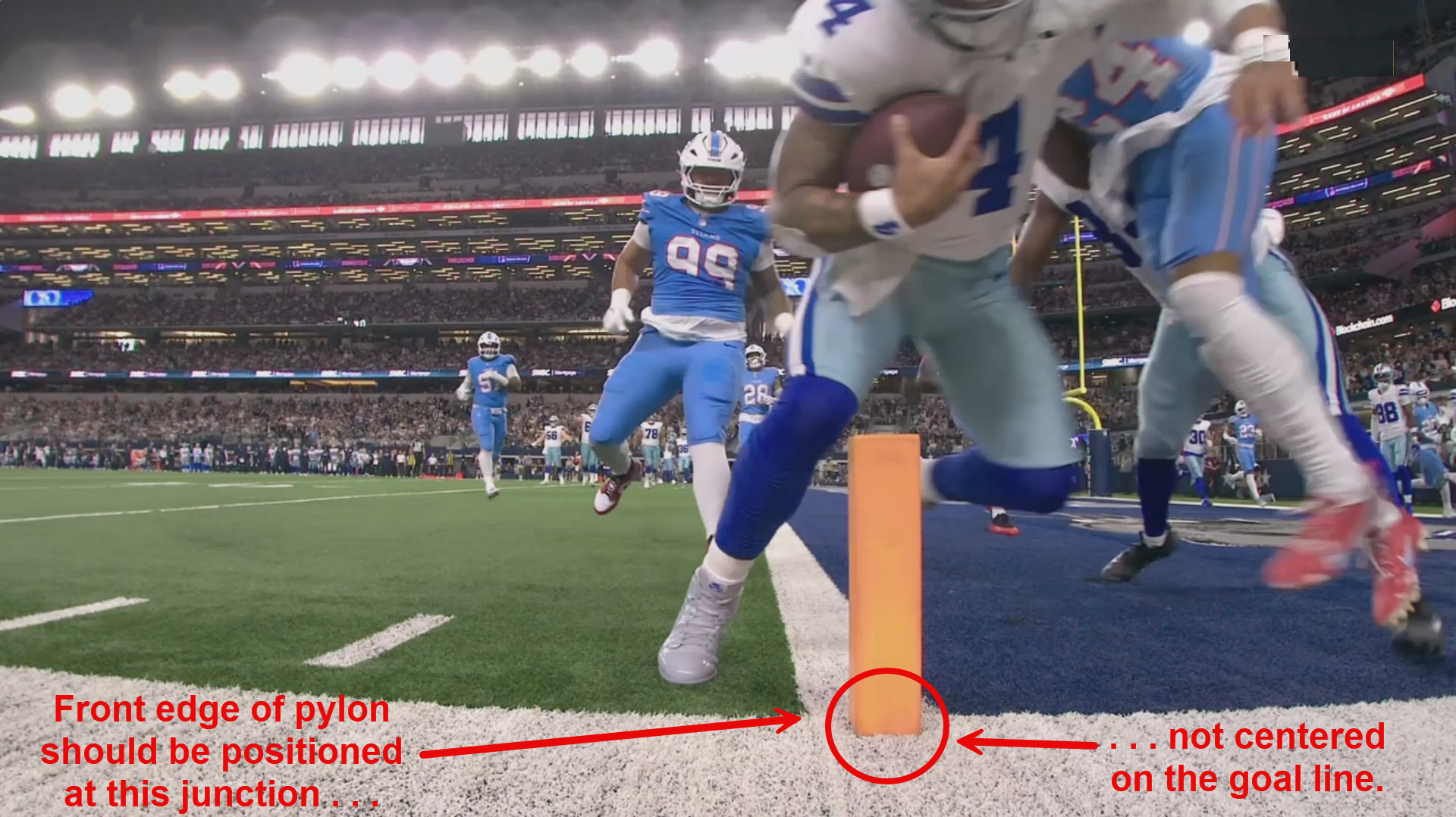
This is a legitimate touchdown. The Cowboys’ Dak Prescott was originally ruled short, but replays showed that he dragged his right foot across the goal line, and the original call was correctly reversed.
We include this to demonstrate just how little is understood about pylons.
First, the pylon in this case was incorrectly positioned. As an accompanying photo shows, pylons are placed in out-of-bounds territory at the front of the goal line. Here the pylon is more or less in the middle of the goal line. Do the people who set up the field not understand where pylons are placed?
Next, commentator Greg Olsen, whom we consider a good analyst, states that Prescott needs to get the ball inside the pylon to merit a touchdown. Not so, according to the NFL Rulebook, as this site’s pylons article explains. In the Rulebook, see Rule 11 (Scoring), Section 2 (Touchdown), point (b):
A touchdown is scored, and the ball becomes dead when: (b) a ball in possession of an airborne runner is on, above, or behind the plane of the goal line, and some part of the ball passed over or inside the pylon.
So the rule is even more liberal than Olsen perceives. Just about anything goes, it seems, if a ballcarrier is at least within the same county as a pylon.
Later, rules analyst Mike Pereira, a two-time cancer survivor and someone we greatly respect, mentions that because Prescott’s foot drags across the goal line, at that point the goal line “extends.” The inevitable question is “why?” Why does the goal line suddenly shapeshift and become wider? Why?
Whew. The existing interpretation of pylons leaves us endlessly perplexed.
Video and image: Fox Sports
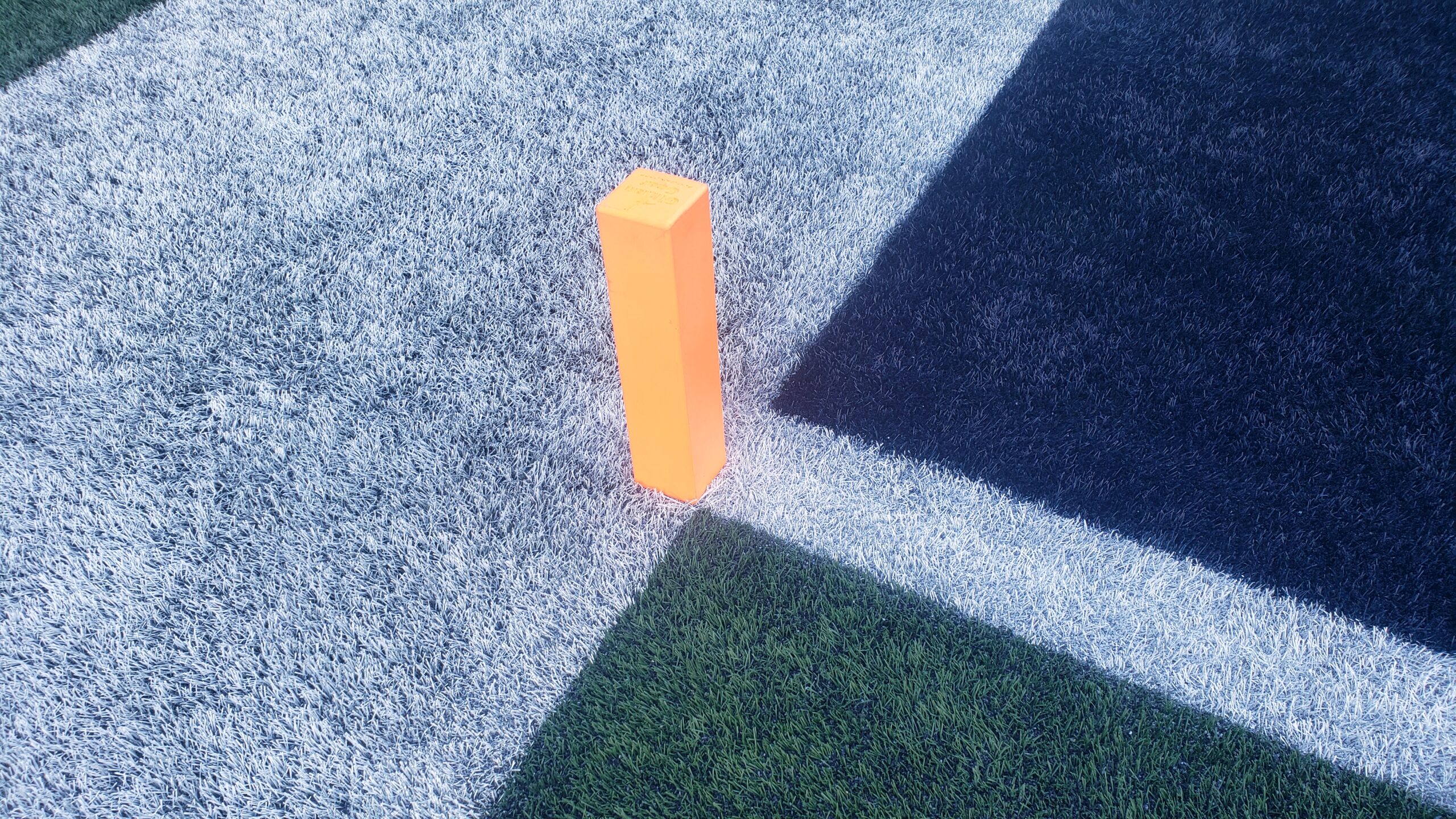
Image: FixtheRule