
16 games, Jan. 3/4, 2026
5566 +2/232\\
Week 18: 63 Touchdowns: 1 ATD
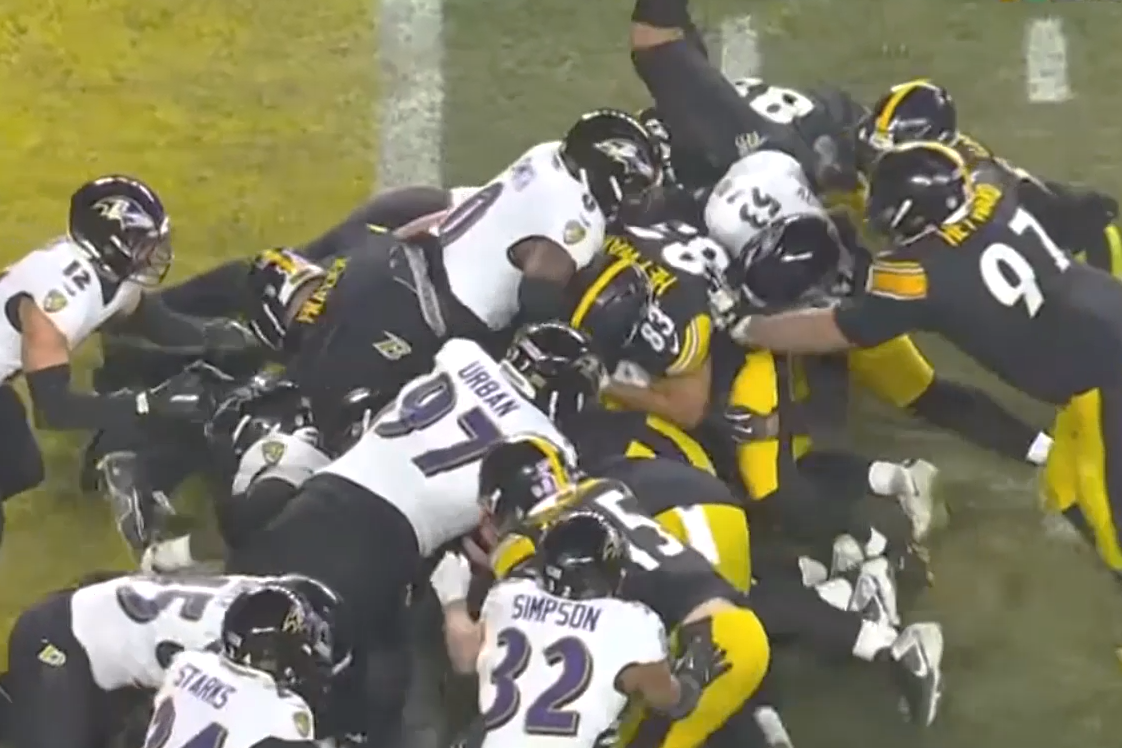
BAL@PIT: Laying down on the job
Connor Heyward (83), on most occasions a tight end, takes a direct snap and gets pushed forward by his larger, older brother, Cameron Heyward (97). He eventually breaks the plane but finishes the play merely lying atop a heap of bodies, never touching the end zone.
Our belief is a ball carrier, to be awarded football’s highest payout, six points, should finish the mission — make actual contact with the designated scoring area, i.e., the end zone. In our view, simply leaning into the end zone’s airspace does not merit six points. In a contact sport, you should contact the end zone.
When a tush push only achieves a little crowd surfing for the ball carrier, it should not be a touchdown. Hocus Bogus Rating: 1.5
Video and image: NBC Sports
College: Wavy gravy
Bowl season dished out an assortment of wacky pylon rulings this college postseason. We offer a small sampler of what we witnessed.
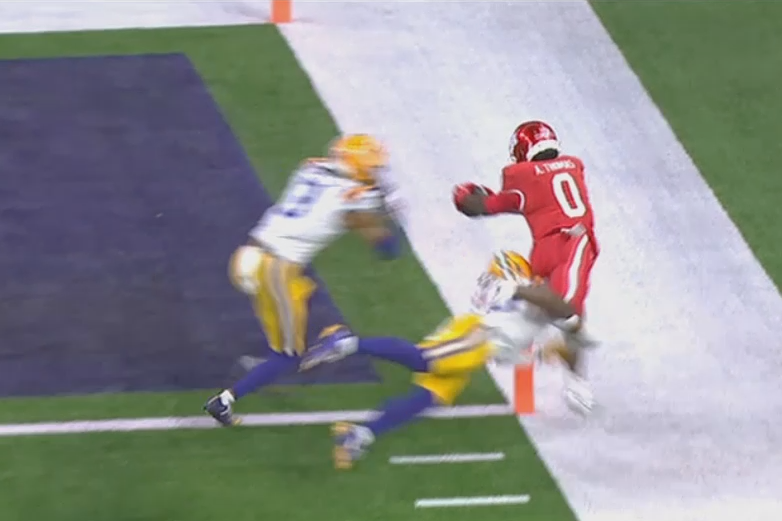
Texas Bowl: Amare Thomas of Houston proves you don’t need to touch the end zone to be credited with six points. Just appear to wave the ball in the vicinity of the pylon while you’re flying far out of bounds and you’re riding on the easy-score gravy train. Rating: 5
Video and image: ESPN
College: He landed where?
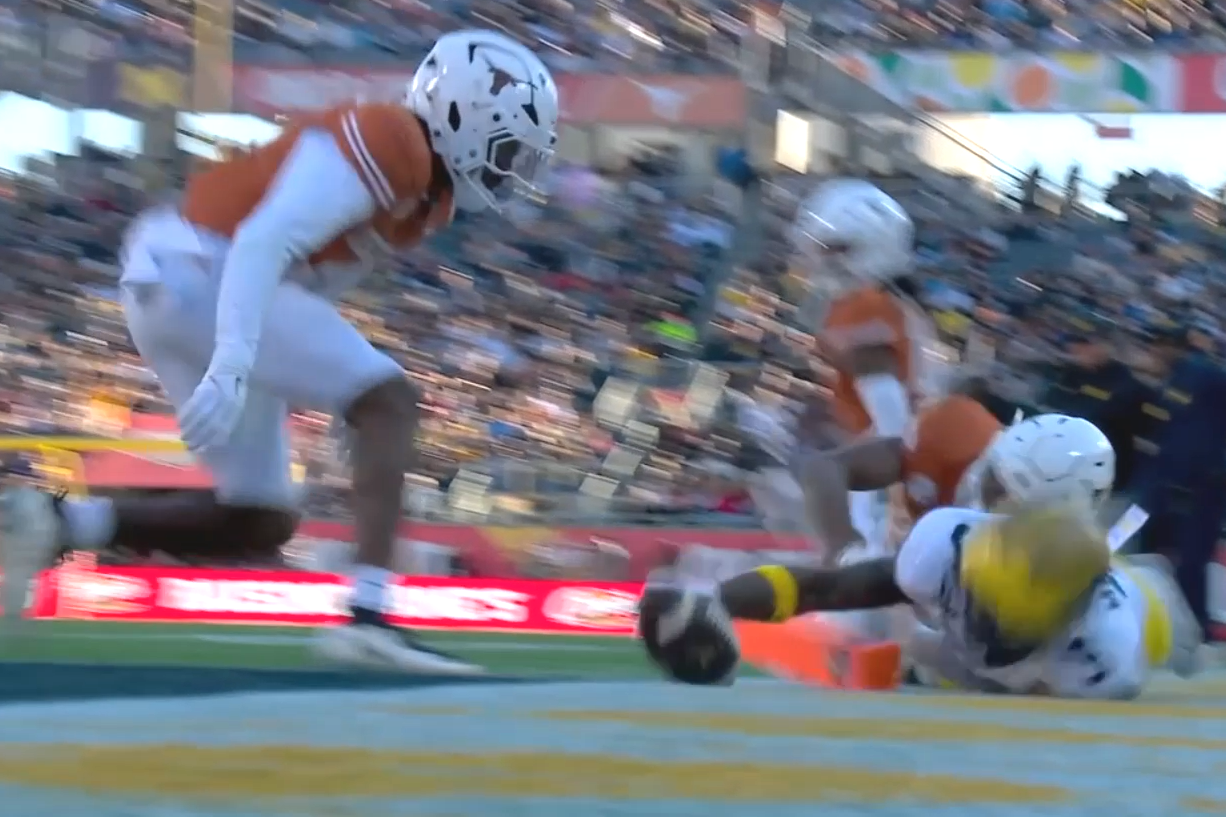
Citrus Bowl: Did Michigan’s Andrew Marsh touch the end zone? No. When he first made contact with the ground once he was beyond the goal line, where did he land? About a yard out of bounds. Where did he first make contact with the ball? Out of bounds, by the length of the football.
What did Marsh earn for entirely missing the end zone while getting knocked out of bounds? Six points. Such thinking just drives us batty. Rating: 5
Video and image: ESPN
College: Over and out
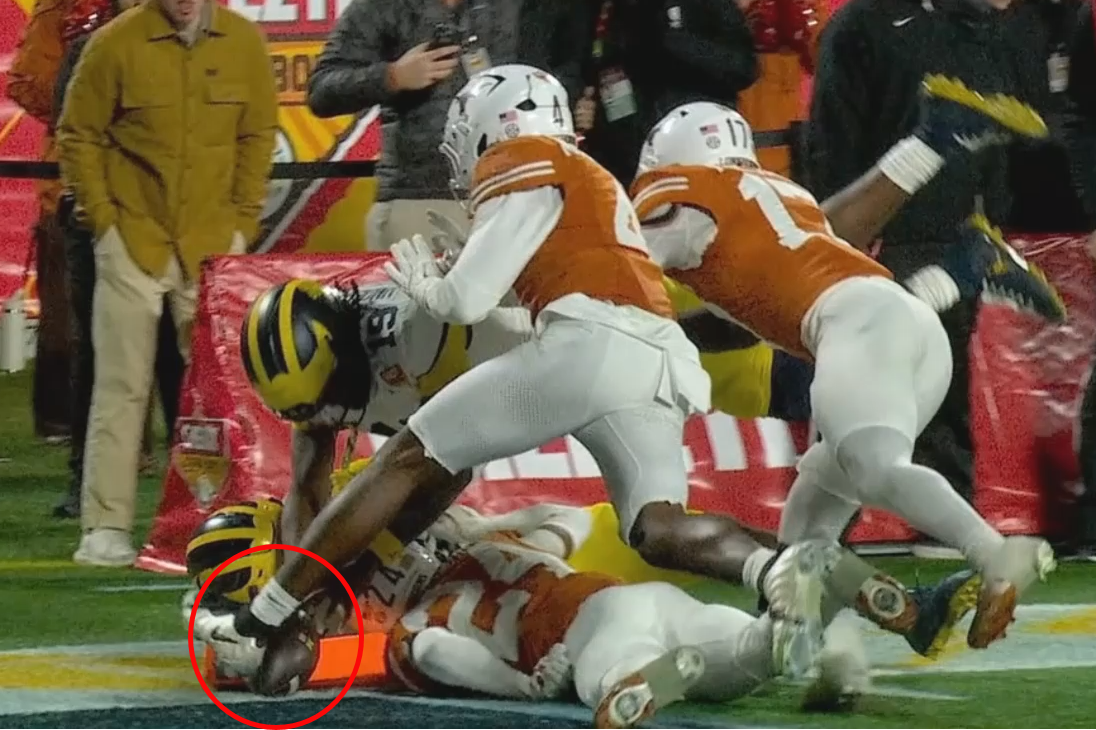
Citrus Bowl again: Understanding that close enough is good enough when it comes to pylon dives, Michigan’s Bryce Underwood (19) elects to take a leap at the pylon just to see what happens.
Shrewd move. Even though he never touches the end zone and the ball slips out of his hands before he makes contact with the ground, the astoundingly permissive break-the-plane rule gives the officials the generous leeway to declare this to be a touchdown. Incredible.
We present a replay that runs more than 2.5 minutes just to demonstrate the time-consuming absurdity of the rule. Announcers and officials hem and haw over where Underwood supposedly broke the Great Invisible Plane. Instead, in a more logical world, announcers and officials would need just a few seconds to see Underwood never touched the end zone and move on to the next play. Why do we put ourselves through such silliness? Rating: 5
Video and image: ESPN