
10 games, Wild Card (6): Jan. 10/11/12; Divisional (4): Jan. 17/18, 2026
3335566 +2/232\\
Postseason: 51 Touchdowns: 3 ATDs
HOU@NE: Pylon puzzler
Divisional round: Pylons are fully, entirely, 100 percent out of bounds. Yet banging into one, or merely passing over it, gets a ball carrier six points. Why? It’s easier to explain dark matter than try to understand this loony concept.
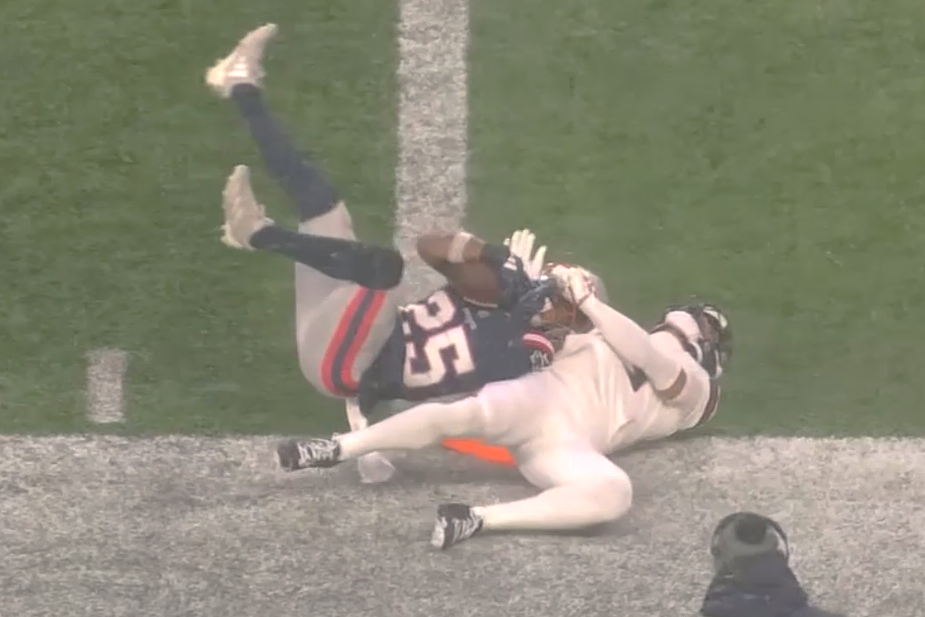
Yet here we see New England Marcus Jones, while running with an intercepted pass, get yanked out of bounds near the goal line by Houston wide receiver Xavier Hutchinson (19). Hutchinson flattens the pylon. Jones flies out of bounds near where it stood. Did he pass over the pylon’s footprint? Does anyone really know?
What IS clear is that Jones never touched the end zone. But that’s not a factor. Apparently because Jones enabled his aura to intermingle with the essence of the once-upright pylon, he was instantly awarded a touchdown. No expedited review necessary.
How can anyone think such a call is the result of sound, logical thinking? Dumbfounding. Hocus Bogus Rating: 5
Video and image: ESPN
College: Pylon puzzler, CFP edition
College Football Playoff championship game: We detour into the world of college football simply because a touchdown ruling caused our eyes to spin.
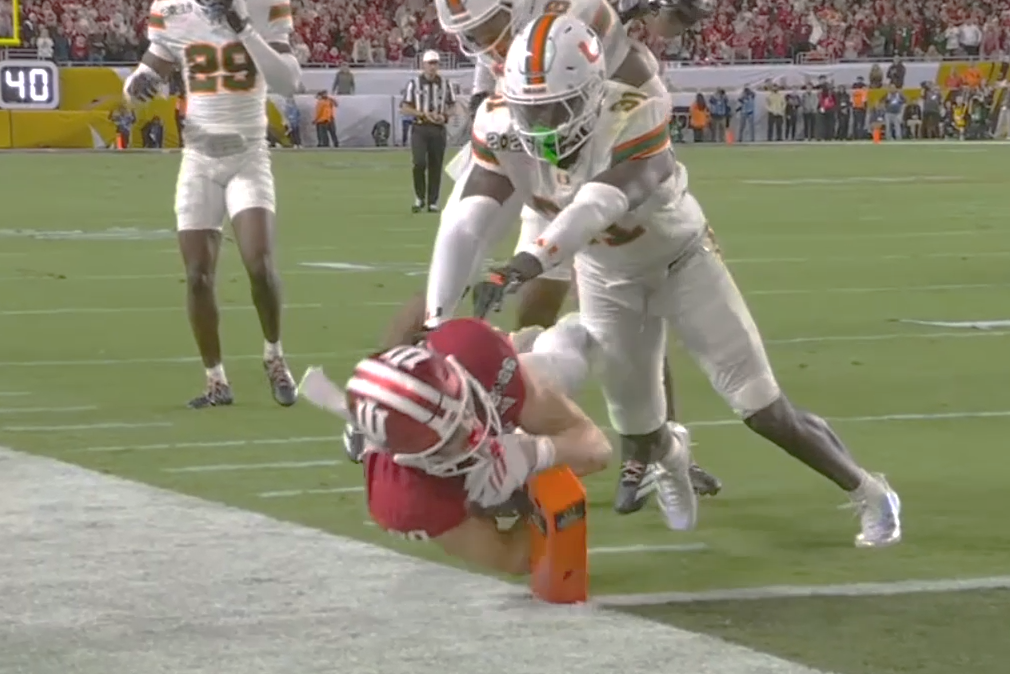
Had not Indiana’s Charlie Becker (80) grazed the sideline with his foot at the 6, his crash landing outside the end zone would have been a touchdown. It was originally ruled as such.
Yet Becker never touched the end zone. He did, however, plow into a pylon (an object that is fully out of bounds) while being knocked to the sideline. And that, for reasons not fully understood in our camp, was originally ruled worthy of six points until the edge of his right shoe was shown on replay to have barely clipped the sideline at the 6.
Such a contrast: That slight touch at the 6 nullified Becker from advancing. Yet when he body-slammed out-of-bounds territory near the goal line, that action was considered touchdown-worthy, all because he smashed into a pylon. That’s one head-shaking judgment call. Rating: 5
Video and image: ESPN
GB@CHI: Cutting corners
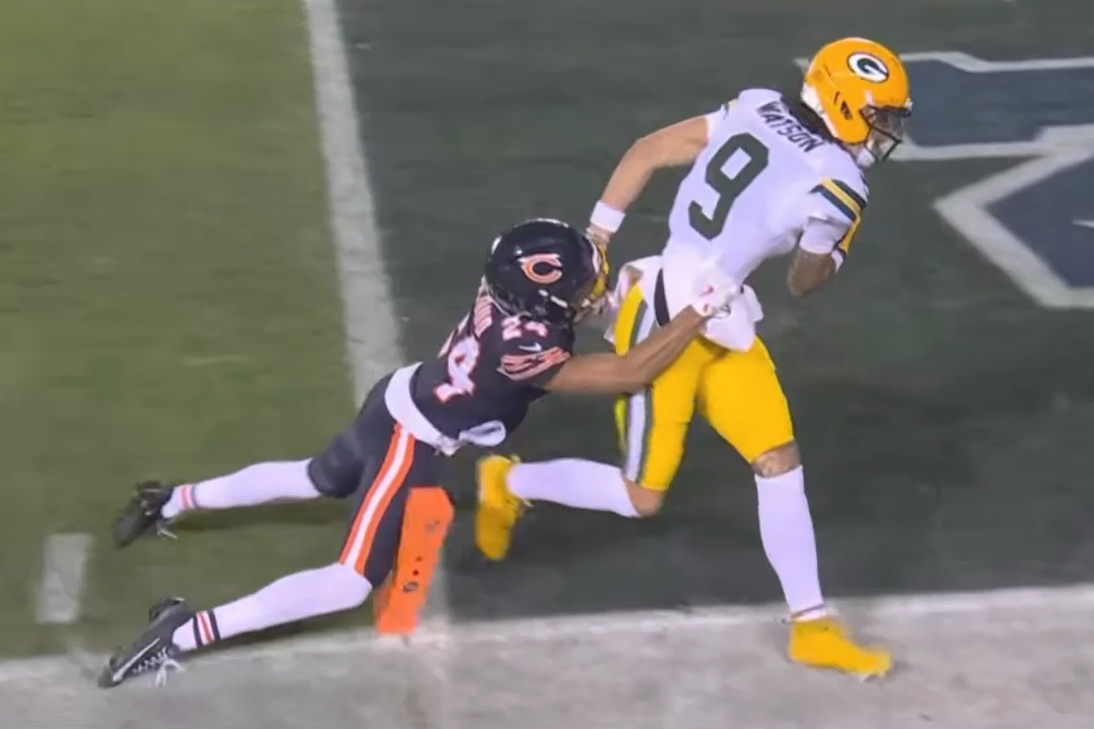
Wild Card round: Did Green Bay’s Christian Watson break the plane? Yes. Did he ever touch any portion of the end zone? No. Thus we say no score. Line up and run another play from inside the 1.
Are we being too demanding? Could be. Fans have watched plays such as this ruled a touchdown for decades, so to change that thinking is a real gear-grinder for many people.
Our view is this: Breaking the plane is not enough when points are involved. To earn the highest payout in football, a heaping helping of six points, a ball carrier should be required to make some degree of in-bounds contact with the end zone. If a receiver needs to get two feet down just to get credit for a catch, it seems reasonable to ask a ball carrier to get at least some fragment of his body into the end zone to walk away with six points. Otherwise we’ll continue to witness All-Ugly touchdown rulings such as the bunnyhop touchdown perpetrated by Trevor Lawrence (see Week 9). Rating: 3
Video and image: NFL Network/Prime Video
HOU@PIT: In or out?
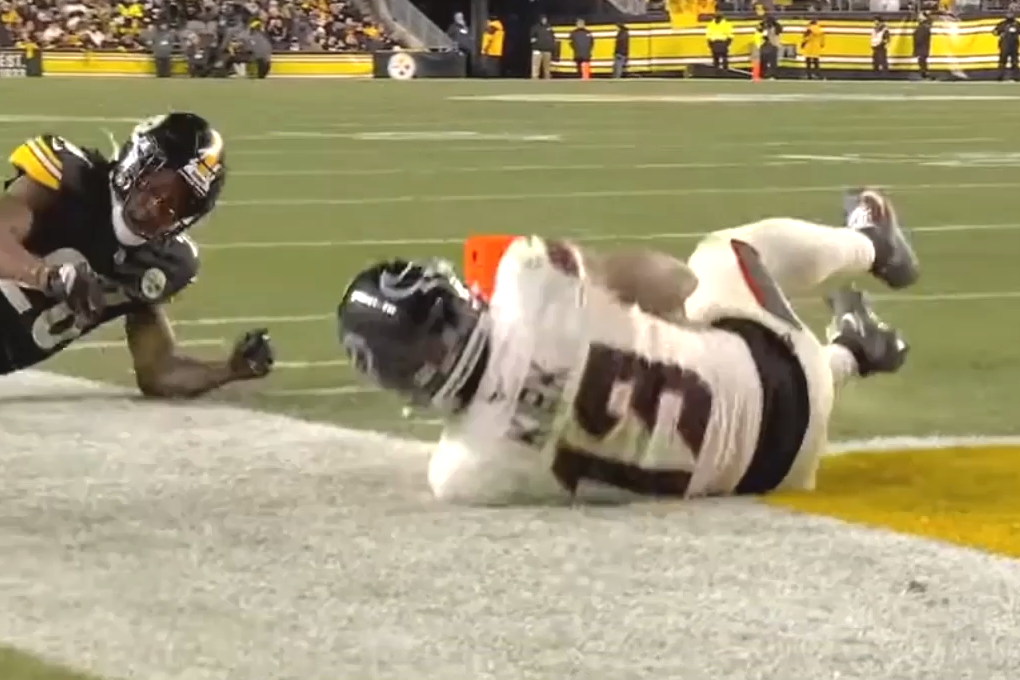
Wild Card round. Just like Green Bay’s Christian Watson, Houston’s Christian Kirk flies above the goal line before he crash-lands with his torso out of bounds and his left hip in bounds. It’s a simultaneous ground strike, so anywhere else on the field he would be ruled out of bounds. Yet here, due to the magic of passing through a portion of the end zone’s airspace, he is awarded six points.
We have seen this play ruled a touchdown for decades, so most people, hypnotized by the break-the-plane rule, would agree that it’s a score. And we think that if the break-the-plane rule could be modified with what we call a “momentum clause,” it should be. But if we stick to logic, where in-bounds contact with the end zone should be required for six points, then this play falls short. Rating: 2
Video and image: ESPN